Wednesday, 3 October 2012

Hammersmith and Fulham Enterprise Club


Last Wednesday evening I was invited to deliver a presentation at the Hammersmith and Fulham Enterprise Club about my experiences in setting up Computer Angels. My audience was made up of some 90 or so entrepreneurs who are either running or thinking of starting their own businesses. Rather than bore my audience by talking solely about my own journey, I tried instead to pass on the principles the differentiate businesses that last from those that fail.

It helped that just by being there, my audience were showing that they were prepared not just to work late into the evening, but also to learn before leaping. In the UK small business failure rates are highest in the first year of trading, sometimes  because people underestimate the capital required, but also because they have failed to get their product or marketing strategy right, or else have underestimated the sheer hard work involved, or come to that any one of a dozen other reasons.

In short, they've failed to do their homework. And here am I in front of 90 motivated individuals, and it occurs to me that I AM their homework.

The truth is that it’s a real slog running your own business. You’re the one the buck stops with. You’re the one who is never really on holiday. You’re the one who doesn't get paid when you have a bad month. And yet here’s a room full of people who want to be where I am.

One of the reasons I was invited to give this presentation was because of our recent Brilliant Business Awards award. This fitted in quite well with my theme because if there was one message I wanted to get across it was that a small business depends upon its customers, and that social media now means that communication with your customers is a two way street. Not only does it mean that poor business will suffer because of poor review, but also that once in a while a satisfied customer will take the time and trouble to do something wonderful, like nominate you for an award. So whoever you were, thank you.

I hope my audience got something useful out of my talk. I certainly did – looking out across my audience I got to realise just how far we have come. That actually what we've achieved is something substantial. We employ seven people full time and two part time. We contribute to the economic well-being of the country not just by paying tax, but by enabling our own employees to go out and spend their earnings on products and services that in turn allow other to keep their jobs. In short we play our part along with thousands of other small business in providing the life-blood that keeps this country’s economic heart beating. And we do all this only because our customers allow us to do so by coming back.

You can download the presentation here.  


Tuesday, 25 September 2012

Why iOS 6 Changes Everything for Businesses


It’s been a mixed week for Apple fans. On the positive side comes the launch of the iPhone 5 (people are already complaining that it’s too thin and too light). At about the same time iOS 6 was unleashed on an unsuspecting public.

I already have some strong views on iOS 6, primarily because Apple have chosen to abandon the excellent Google Maps. Given Google’s huge investment in map data it was inevitable that any replacement would be playing catch-up, and given the US-centric attitude that Apple showed with Siri and localised data, why would we expect anything better from their propriety map data?

My neighbour decided to upgrade her iPad to iOS 6 against my advice – the following day she was begging me to get her back to iOS 5 (it’s possible, but you need to have done a backup first). So pity the poor inhabitants of Doncaster (Duncaster), or anybody looking for Manchester United (you’ll end up at Sale United, a team for five year olds and above).

I’ve no doubt that Apple will work hard to improve their maps – they certainly have the resources, but one big change that affects businesses is the use of Yelp as providers of data for their maps. Yelp.com is best described as yell.com meets Trip Advisor – it’s a directory of businesses that bases ranking largely on reputation, and reputation comes from user reviews.

Given the widespread use of iOS devices it would be foolish for any business to ignore this opportunity. We’ve been on Yelp for a year or so, but I took some time to fill in the gaps on our profile and look forward to the reviews flooding in.

I think Apple’s use of Yelp reflects a growing trend in consumer-driven directories, and it also bears out the maxim that people who receive bad service are highly motivated to post negative reviews. This morning I spoke to a new customer who was very focused on our service record – we directed her to our website which contains a live feed to our feedback survey results, which every customer is invited to contribute to. Her concern was due to her past experience with one of our less reputable competitors with whom we have had dealings in the past.

Once they had done their damage she only then thought to check them out online, which is a shame as the customer feedback is unanimously poor , and had she known this in advance she wouldn’t have touched them with a barge pole. Another of our local competitors has taken to repeatedly changing their name in a pathetic attempt to leave their bad reputation behind them, but as their address is the same I’m not sure who they think they are fooling.

If you can detect a measure of schadenfreude in my tone you’d be spot on. Good service takes hard work, and if companies aren’t prepared to put that work in then they shouldn’t be in this business. It’s fantastic to see that social media is now playing a part in weeding out the cowboys. More power to the people!

PS If you’d like to give feedback on our service you can do so via our website or tell the world at:


Thursday, 6 September 2012

1984 - 2012. A Short History of Freedom

I was at school when I first read George Orwell’s 1984. In those days the spectre of the surveillance society was seen as a bad thing. Today for reasons that I really don’t understand, we seem on the point of entering that Orwellian twilight with minimal opposition from a society that once stood as a bastion in the struggle for personal liberties.

A fortnight ago public consultation on the Communications Data Bill closed. Otherwise known as the Snooper’s Charter, this Bill in now being scrutinised by the Joint Committee. There has been widespread opposition to this Bill, and rightly so; the proposals include keeping the details of every website you visit, every email you send and every call you make. Campaign group 38 Degrees collected over 180,000 signatures during the consultation period, and they are far from alone with MPs across the political spectrum being forced to listen to their constituents’ concerns. Yet if the government determines that it has sufficient political support I fear that these proposal will become law before this Parliament ends.

The legislation has its roots in the most benign of origins. In the early days of telephones the Police realised that a person’s phone records could hold valuable evidence, and as they were already being kept for billing purposes by the Post Office they were granted special powers to apply for access to this otherwise private information. As these records became computerised these powers were increased to encompass this new data, and the Police now see the widening of scope to encompass the internet and email as a natural extension of these powers.  

Unlike the old telephone bills, however, these records are not already being kept in any detail, which is why this scheme will, we are told, cost £1.8 billion to implement (expect it to cost much more as usual). Also unlike phone calls, my use of the internet, and the sites I visit are my own business, and this natural privacy is being infringed. There are huge differences between making a phone call and visiting a web site, not least in the fact that I might make a few dozen calls in a day, yet visit several hundred web pages, including ones which might relate to my banking, health, or political persuasion. There is a balance between our right to privacy, and the need for security, and this Bill abjectly fails to respect that balance.

Another major concern is that huge volumes of data are to be collected, but who is going to keep this information secure? With our government’s woeful data security record I wouldn’t be the least bit surprised if this data ends up being as useful to the Chinese government as it is to ours.

Sir Tim Berners-Lee, founder of the World Wide Web has spoken out against the bill: "In Britain, like in the US, there has been a series of bills that would give government very strong powers to, for example, collect data. I am worried about that."  

Wikipedia co-founder Jimmy Wales (who I had the pleasure of meeting at the inaugural meeting of ORG a few years ago) gave evidence to a parliamentary select committee on the bill on Wednesday, described the legislation as "technologically incompetent"; "It is not the sort of thing I'd expect from a western democracy. It is the kind of thing I would expect from the Iranians or the Chinese”

I cannot see a public interest in these proposals, however in the truest traditions of Newspeak I expect the government to announce any day now that they have decided to proceed with this Bill in the name of freedom and democracy.

Thursday, 16 August 2012

The Link Between the Olympics and Data Loss


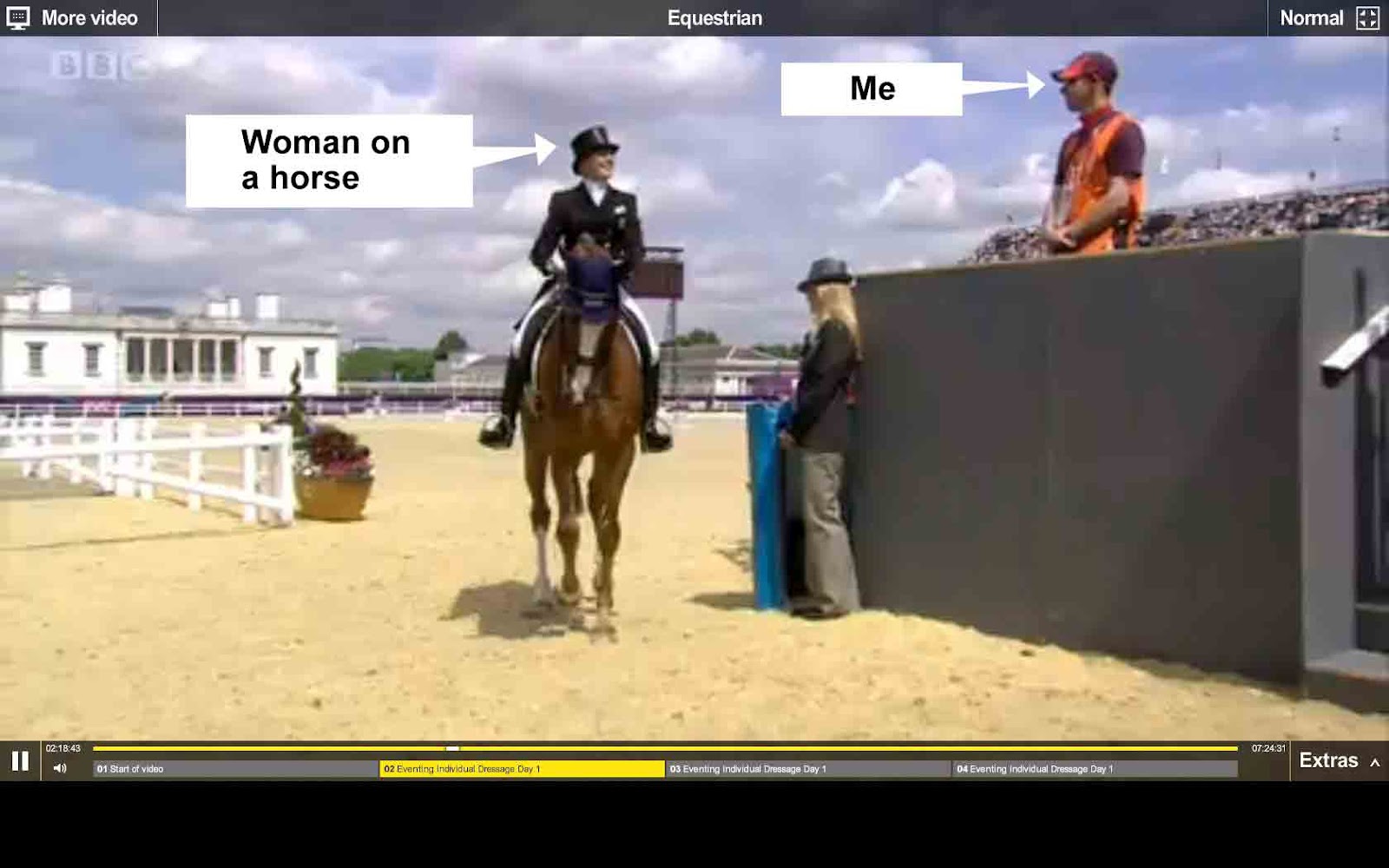
As some of you might have found out from my Out of Office reply, I’ve just finished a two week stint at Greenwich Olympic Equestrian Centre as a Games Maker. As holidays go this was incredible. Not only did I get to watch many hours of equestrian eventing (which isn’t something I would have considered exciting two weeks ago),  I also got to work with a team of highly motivated and enthusiastic volunteers who were dedicated to helping make the experience of the general public as amazing as possible.

There are lots of parallels that I could draw between my role as a Games Maker, and my role at Computer Angels; both are essentially customer service roles, and in both I get to work with people who are enthusiastic about what they do, although sadly I’m required to pay my own team of Angels.

One interesting facet of my Games Maker role was that of photographer – not officially of course, but over the two weeks I must have offered to step in hundreds of times when members of the public were taking photos of themselves in and around the arena.  Taking this smallish sample I can draw the following conclusions:

1. Approximately 60% of people at Olympic venues now use their phone as their camera.
2 Of those iPhones outnumber Android phones by a factor of approximately 3:1
3   There’s somebody out there who still uses film.

Having been exposed to so many iPhones I was also surprised at how many being used had cracked screens – I suspect that this has something to do with the cost of replacing the handset – phone screen repairs should cost under £100, but if you don’t know this or if you are on a budget you may opt to wait until you are eligible for your next upgrade, and just live with the cracks.

Anybody with a recent iPhone using iOS5 will know that one of the great advances in photography is down to the use of the volume-up button  to take photos. Previously you had to hold the camera with a thumb and finger of one hand and then poke a small icon on the screen with your other hand. If you were taking a one handed photo of yourself then your chances of holding the camera on one hand and coordinating a single finger from the same hand onto a small spot on the screen that would now be facing away from you were vanishingly small. Apple solved this problem with the volume button feature on iOS5 nearly a year ago, and I’ve got used to using the button rather than the screen which meant that when I was presented with an iPhone 4 or later I’d try using the volume button to take the photo.

Here’s the surprise; less than half of the phones I tried this on had been updated, which meant the button didn’t work. Given that the same update included the ability to install subsequent updates without connecting to a computer, this means that many  of these phones had not been synced in nearly a year or more. Which in turn means that they had not been backed up in nearly a year or more. Now cross reference this information with the bit about the broken screens, and one would infer, a tendency to drop their phones, and you’ll see a potential for a lot of lost phone numbers.

Wednesday, 11 July 2012

Why you need to customise your iPhone lock screen.


I have a friend who works for Apple and loves their corporate culture to the point of embarrassment (mine mostly). We were sitting in a smart London restaurant having brunch and discussing Apple products when I noticed that we had both placed our iPhones on the table in front of us, as had almost every other customer in the restaurant.  A quick survey of the tables revealed 14 iPhones and a single Samsung Galaxy on show. With a sample that small one shouldn’t leap to statistical conclusions, but I believe this impromptu survey conclusively showed that the iPhone is by far the preferred choice of the affluent residents of Westbourne Grove.

Nationally Android phones are outselling IOS phones, although the latter still enjoy numerical superiority in the smart phone market as they’ve been around for longer. In time this will change because iPhones are substantially more expensive than their Android competitors; I own an iPhone because I find that Android phones are a little clumsier to operate; this perception is reflected in industry handset satisfaction surveys which rate iPhones as the best by a margin of 10%, and I’m prepared to pay the substantial premium to own an iPhone 4 because I prefer the slicker operating system and the ease of use that comes with it. Many other people will take a more parsimonious view and opt for the cheaper handsets.

While I’m busy generalising one thing I noticed a few months ago when we had a surge of MacBook viruses was that Mac users are far more gullible than Windows users who have spent years living with security threats and as a result have become cautious in their surfing behaviour. Each of these Mac infections had been invited on board by the gullible user clicking on a ‘Yes’ button because if the web site was telling them that they needed to install a security scanner, then this must be true.

To test this hypothesis I explained to my friend that iPhones had a vulnerably that allowed me to change her unlock code (which I don’t know of course) while her phone was still locked.  She refused to believe this was possible until I took her phone from her, shielded it from view for a few seconds, and then returned it. When she tried to enter her unlock code it wouldn’t work, and although I reversed my hack a few seconds later she no doubt went back to the mother-ship where her reports of this security vulnerability may for all I know still be keeping teams of experts working long hours trying to replicate my feat.  My trick was simple – seeing that she was using the default Apple wallpaper on her unlock screen I waited until she went to the loo and then changed my own phone to use the same default wallpaper (predictably, I normally have a photo of my cat). When she came back I simply used some basic sleight of hand to swap phones. The real irony is that she didn’t notice that my phone is an iPhone 4, not a 4s like hers. So yes, gullible.

The moral of the story is make sure you personalise you iPhone wallpaper before your friends start taking advantage of you.

Tuesday, 10 July 2012

Hammersmith & Fulham Brilliant Business Awards


I was quite surprised to hear that we had been shortlisted under the customer service category for the Hammersmith & Fulham Brilliant Business Awards, not least because we didn’t lobby for this award because, if I’m honest, we’re all too busy to be that organised in our marketing and PR efforts. It was even more of a surprise when we were announced as runners up.

I haven’t a clue which of our customers went to the effort of nominating us, but whoever you are I’d like to say a big thank you! It was a thoroughly enjoyable evening in which ours and other small business were recognised for the contribution we make to our communities, and I’d like to thank Mayor Belinda Donovan, and  Nicki Burgess who organised the event.

Sometimes amidst the incessant turmoil of the day-to day running a business it’s all too easy to lose sight of where we stand with our customers, so something like this serves as an excellent reminder that everything we do comes back to customer service, and this award is a huge boost to our morale as a company. Today the skies may be grey and at 4pm we experienced something close to a monsoon, but there’s a bright patch of sunshine half way down Munster Road.


Thursday, 21 June 2012

PCI DSS – Another Excuse To Rip Off Small Businesses


Running a small business can be challenging, and the burden of regulation is at times staggering. Despite the government’s promises to reduce red tape I've just found out about the Payment Card Industry DataSecurity Standard.  

PCI DSS is all about ensuring that companies properly secure card data, which is absolutely fine with me. You sign up with one of several companies that will, on behalf of your card services company, audit your security on an on-going basis and in theory prevent hackers from stealing your customers card details – in return for a monthly fee of course.

We are a little old fashioned in the way we deal with credit card details in that we don’t store them either in our database or on paper. I promise you that I’m no luddite; I choose not to store this information not out of any fear of being hacked, but out of fear of having to wade through unbelievable amounts of red tape. So we use an old fashioned credit card terminal, and we have rules that dictate that card data is either entered via the Chip-and-PIN terminal, or over the phone directly into the keypad (with nothing being written down).

Surprisingly I first found out about PCI DSS not from HSBC Merchant Services company who provide my card taking facility, but from some poorly addressed emails from an unknown company that I was about to consign to junk because they were addressed to the generic emails we use on our website. Once I’d realised these were in fact genuine, and got over the complete failure of my Merchant Services team to get this important message to me, it was then time to be amazed at a brazen attempt to take money from us in return for nothing.

Can you believe that despite our decision to avoid electronically storing credit card data I  was still told I’d have to pay £84.00 annually to this third part for the privilege of being audited – audited for what I ask you? This seems to me like nothing short of a racket. Even worse is that nobody else seems to be aware of these new requirements despite the fact that next month thousands of small businesses will get their first taste of the regulations when, according to Security Metrics,  HSBC merchant services begin charging them an additional £50 a month for non-compliance.

Security Metrics, who act for HSBC Merchant Services discussed the options with me, and I discovered that by taking the step of unplugging my EPOS terminal from the network and back into the old analogue line I could halve their fees, but that still means I’m paying for a system that is completely divorced from my own IT infrastructure, secure or not.

Smelling a rat I did some research and spoke to Alan Green of nettitude.com who told me that if I opted to use an analogue phone line then I could exempt myself simply by filling in a Self Assessment Questionnaire and sending this to my Merchant Services company every year.

So there you have it: A poorly communicated initiative* that is going to unfairly penalise thousands of small businesses across the UK, while at the same time mis-selling them services that they don’t require. I think it's time the shit hit the fan.

*I really can't say for sure whether HSBMS sent me information on this subject - I can't see how I could have missed it, but then again it's possible I may have taken it for some marketing rubbish. What I can be sure of is that I didn't receive a letter of appropriate gravity to get my attention, nor have HSBCMS followed up the matter which in my book still amounts to a failure in communication given the importance of the subject.